Last updated November 21, 2026
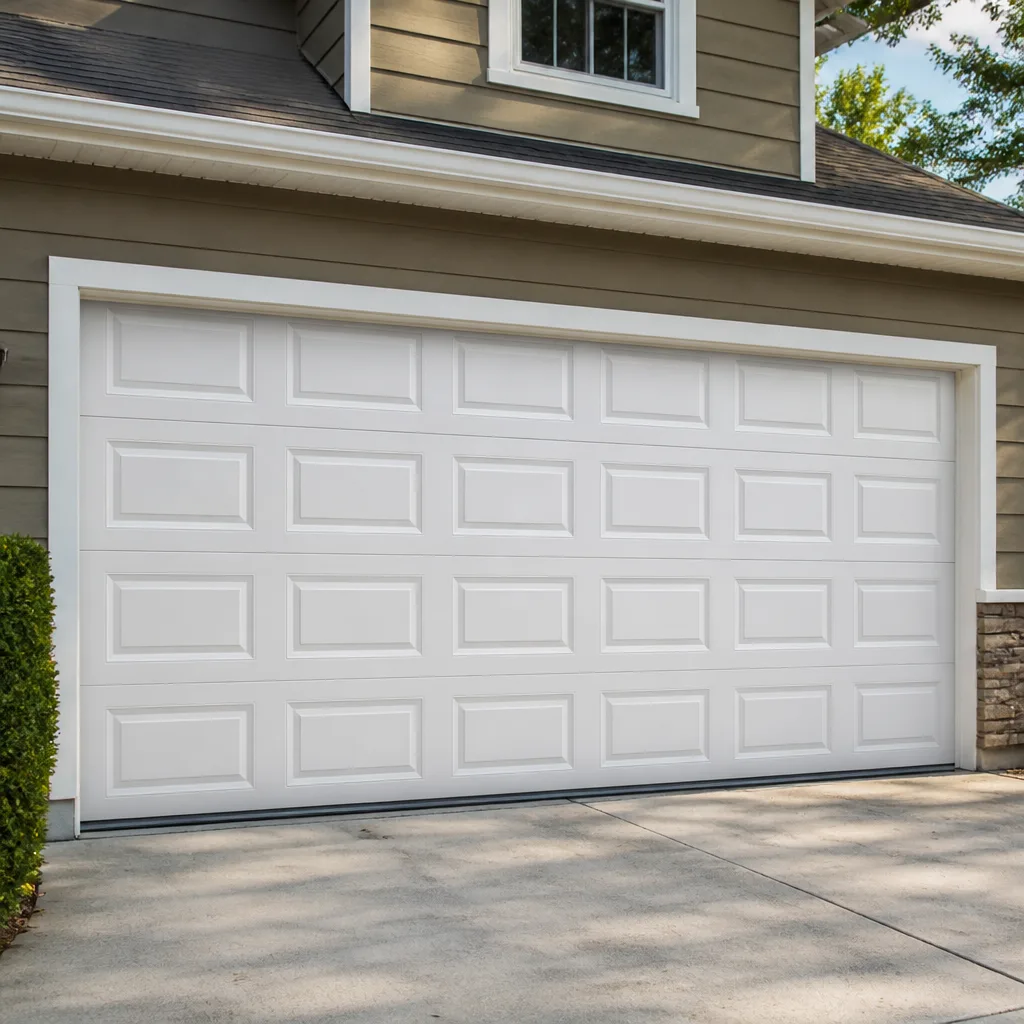 Raised-panel steel
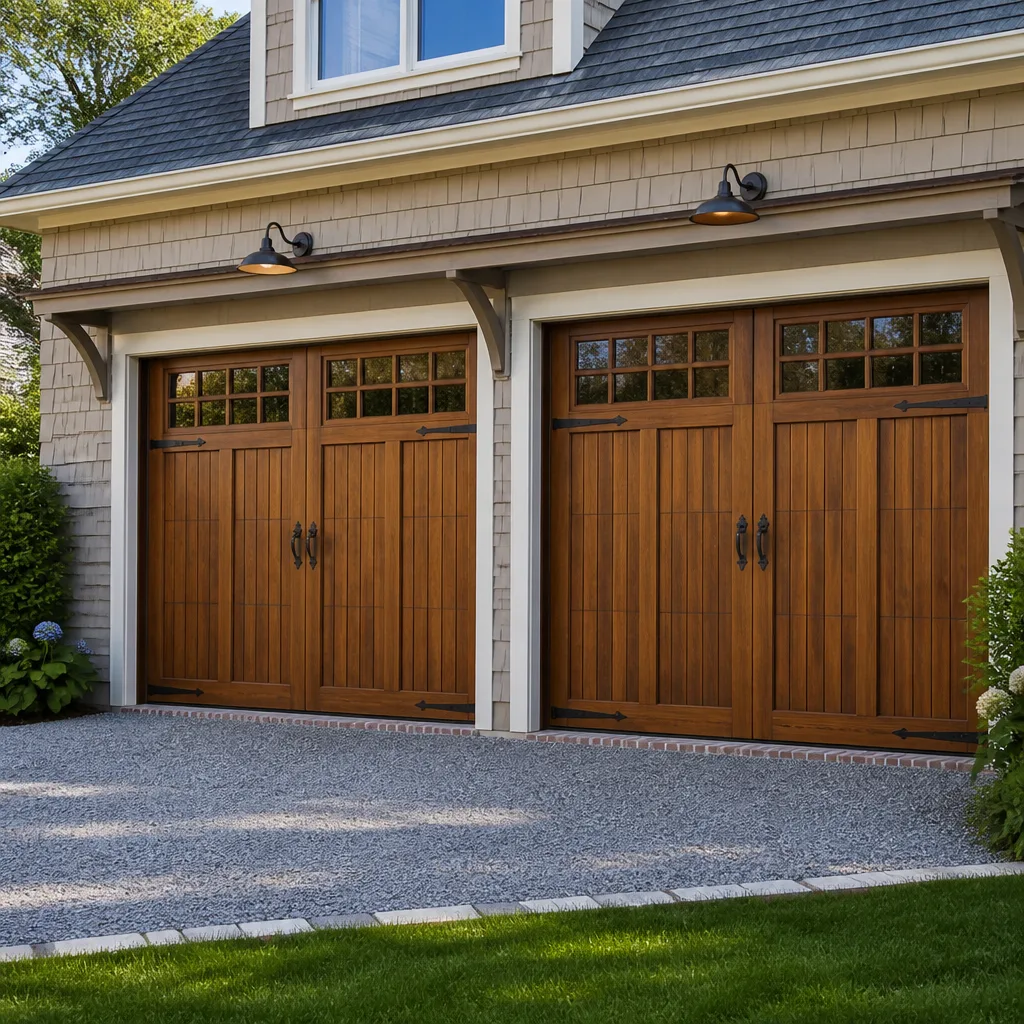 Carriage house
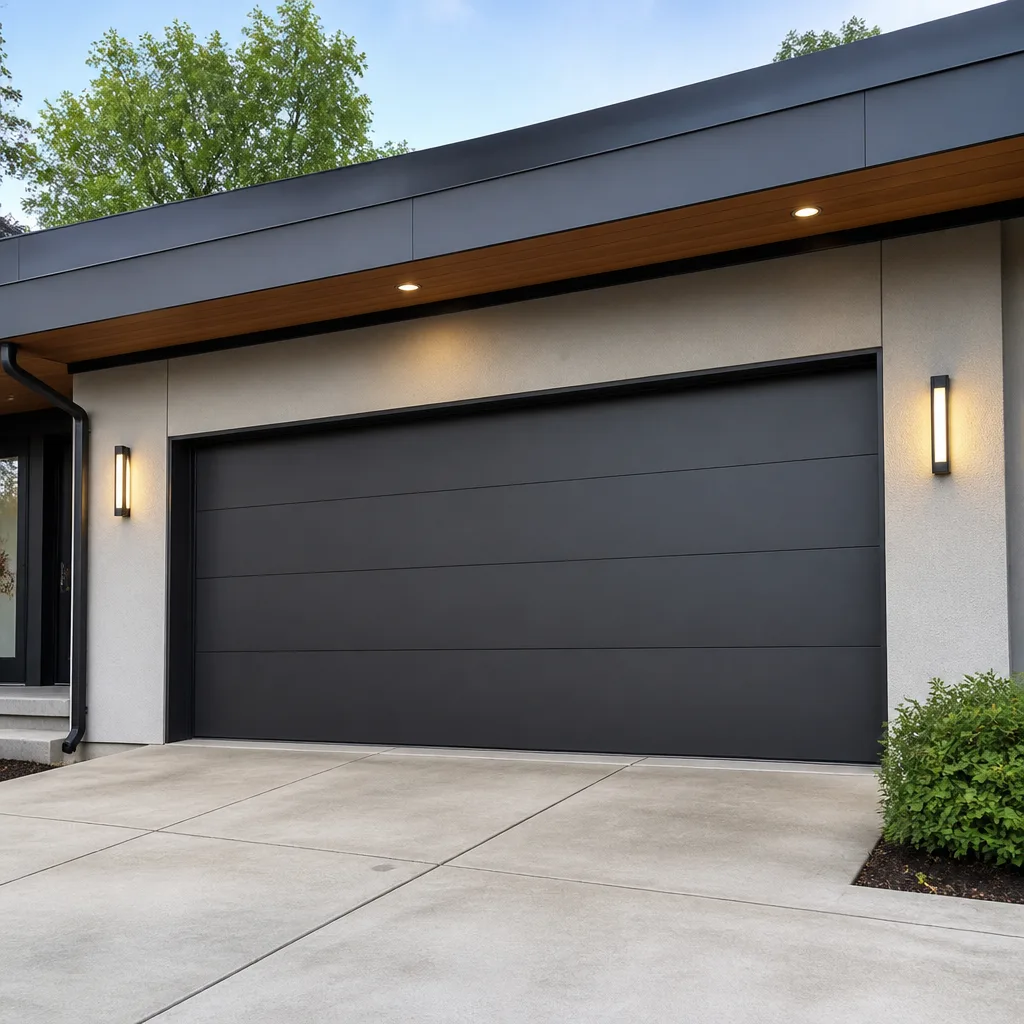 Modern flush
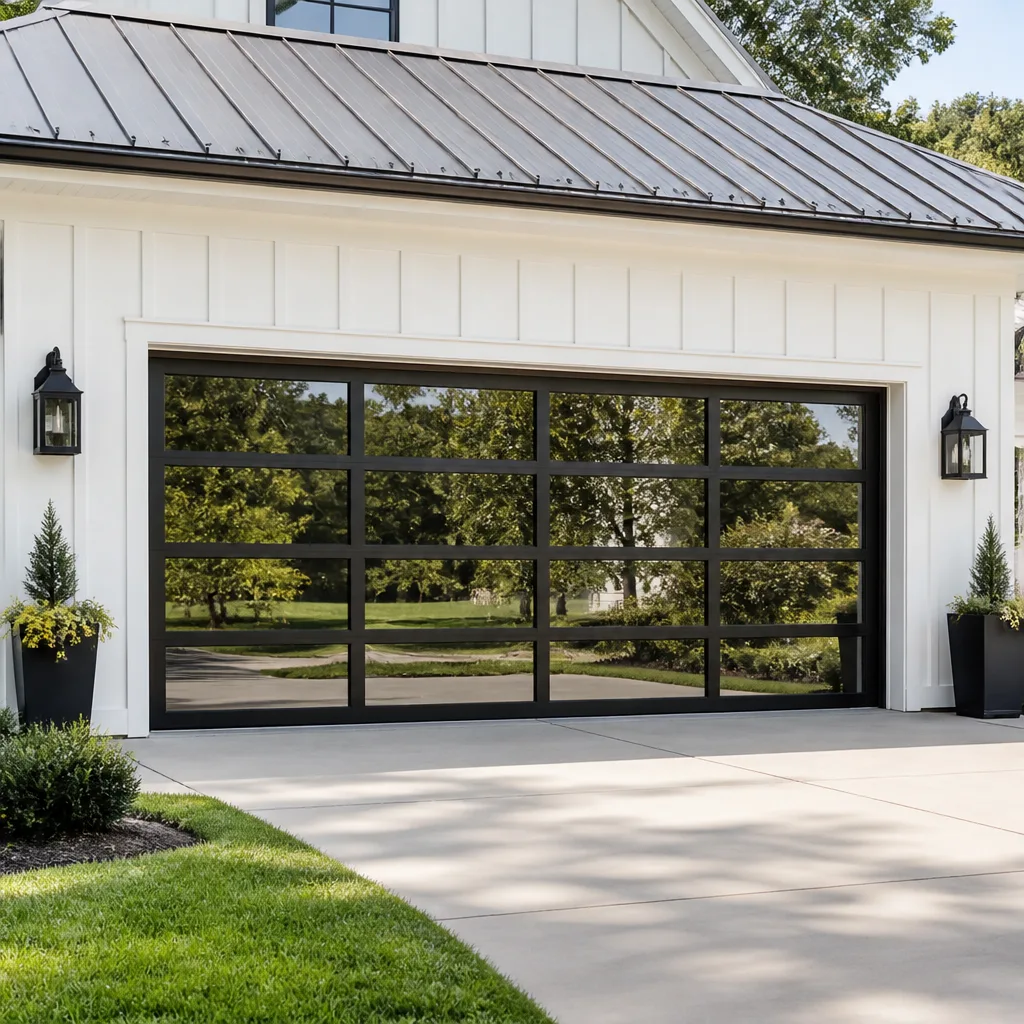 Full-view glass
 LiftMaster openers
 Chamberlain openers
Full 25-point door and opener safety check with every visit - springs, cables, rollers, tracks, and your LiftMaster or Chamberlain opener included
You get a price before we start. It does not change when the pro arrives.
Get your free estimateSeasonal Garage Door Care for Renton: Year-Round Homeowner’s Guide
If you’re doing your garage door maintenance in spring and fall like every generic guide recommends, you’re already behind. Renton’s real damage window opens in late October, and by the time you get around to a “fall checkup” in November, the bottom seal has been wicking water for weeks. The wet season that runs from October to March does most of the year’s damage to garage doors in Renton, and the maintenance calendar should reflect that imbalance. In this guide we’ll walk through what to do in September before the rain settles in, what winter does to doors on Talbot Hill and Benson Hill, why summer is the right time to catch slack cables and dry torsion springs, and the one late-summer task that most Renton homeowners skip entirely. If you’d rather hand it off, our Renton Garage Door Repair Co team works on doors across the city, and estimates are free.
Quick Answer
Garage door maintenance in Renton should be weighted toward the wet season: do the heavy prep work by October 1st, focus on bottom seals and drainage during the rainy months, use summer heat to catch cable slack and lubricate torsion springs, and plan a spring audit once the rain stops. The single most important task each year is replacing the bottom seal in late summer, before the rain starts. That one step prevents a large share of winter emergency calls we see in Renton.
Styles & brands we work with
- Raised-panel steel
- Carriage house
- Modern flush
- Full-view glass
- LiftMaster openers
- Chamberlain openers
Table of Contents
- Why Renton’s Seasons Aren’t Equal for Your Garage Door
- September Pre-Season Prep: The October 1st Deadline
- Winter Freezing in Talbot Hill and Benson Hill: What to Do
- Monthly Winter Checks That Take Ten Minutes
- Why Summer Is the Right Time for Torsion Springs and Cables
- The Late-Summer Task Almost Everyone Skips
- Spring Post-Season Audit: What Winter Left Behind
- Opener Care Through the Seasons
Why Renton’s Seasons Aren’t Equal for Your Garage Door
Garage doors in Renton don’t wear evenly through the year. The rain season from October through March drives most of the damage – warped bottom seals, swollen pressboard panels, water sitting under the door, rusted hinges, and rollers that start to grind after a wet winter. The other six months matter mostly for catching what winter started.
That means the usual “spring and fall checkup” advice is backward for this city. A fall checkup in October is really a pre-season prep. A spring checkup is an autopsy. The calendar we recommend to Renton homeowners looks like this:
- September: the real prep month, with a hard deadline around October 1st
- October through March: the damage season, when you check and clear rather than repair
- April through May: the post-season audit, before summer heat sets in
- June through August: the repair and inspection window, when metal expands and reveals problems
If you live in a hill neighborhood like Talbot Hill or Benson Hill, the evening cold is sharper than in the valley, and the freezing line on the concrete in front of your door kicks in sooner. Renton’s weather is mild by national standards, but it’s wet for months and that’s what eats garage doors here. Water is the enemy in this city, not heat, not hail. We’ve seen how a single neglected bottom seal turns into a warped panel, a strained opener, and a stuck door by February.
One more thing: Renton homes range from older single-car detached garages to newer attached two-car garages with insulated doors, and the wear profile is different for each. An older wooden door in a Talbot Hill garage behaves nothing like an insulated steel Clopay door on a newer build. Knowing which one you have is the first step in figuring out what to watch for. If you’d like a trained eye on your specific door, our team handles garage door repair across Renton and can tell you what your door needs year-round.
September Pre-Season Prep: The October 1st Deadline
September is the month to get the door ready for the wet season, and October 1st is a practical deadline. Once the rain settles in, doing the same tasks means working in the wet, on cold concrete, and possibly discovering a problem after water has already gotten in. Do it in September while the weather is still on your side.
Here’s the September checklist we recommend to every Renton homeowner, in order:
- Replace the bottom seal if it shows any wear. Cracked, flattened, or stiff rubber won’t keep water out. This is the most important item on the list, and we’ll cover it in detail below.
- Check the door’s balance. Disconnect the opener and lift the door halfway by hand. It should hold there without drifting up or down. If it sinks or rises, the springs are out of balance and a professional should check them.
- Inspect hinges and rollers. Look for rust, wobble, or flat spots on rollers. Worn rollers are cheap to replace in September and a hassle to deal with when the door is stuck in January.
- Clear the tracks by hand. Wipe the tracks with a dry cloth to remove grit and leaves. Don’t lubricate the tracks – garage door tracks are meant to stay dry.
- Lubricate moving parts. A garage-door-specific lubricant on hinges, rollers, and the torsion spring coils. Avoid household oil, which attracts grit.
- Look at the weatherstripping around the frame. The stops and trim around the door perimeter should seal against the door face. Loose or torn trim lets wind-driven rain past the door.
- Clear the concrete apron. Remove leaves and debris so water drains away from the threshold instead of pooling against the seal.
That list takes an afternoon for most Renton homeowners. If you want a second opinion before the rain starts, our garage door repair service covers the whole prep list, and we can flag anything that’s on the edge of failing. Getting it done by October 1st means the door goes into the wet season already sealed and balanced, which is when it matters most.
Winter Freezing in Talbot Hill and Benson Hill: What to Do
Renton winters aren’t harsh, but they do get cold enough overnight to freeze the bottom seal to the concrete, especially in the hill neighborhoods where the evening temperature drops faster. When that happens, the door can feel stuck, and the worst thing to do is keep hitting the opener button. That loads the opener against a door that isn’t moving, and the logic board or drive gear can give out.
If your door won’t lift on a freezing morning, work through this in order:
- Stop pressing the opener. Give it one try, then leave it alone.
- Check the seal-to-floor line. Look at the bottom of the door from inside the garage. If the seal is visibly frozen to the concrete, you have your answer.
- Warm the seal, not the opener. A hair dryer on low, run along the bottom edge from the inside, will usually free the seal within a couple of minutes. Never use a heat gun or open flame on a rubber seal, and never pour hot water on the door.
- Lift the door by hand if you can. Release the opener according to the manufacturer’s instructions (the red pull cord on most openers) and lift manually. If it comes free, you’ve confirmed a frozen seal.
- Clear the ice from the apron. A stiff broom removes most of it. Salt or sand helps with grip but you don’t want salt sitting against the seal all winter.
Prevention is easier than thawing. A quality bottom seal and a clear, sloped concrete apron are the two things that keep doors from freezing to the floor in Talbot Hill and Benson Hill. If your seal is already flat or cracked, no amount of clearing will stop water from pooling underneath. For doors that won’t open at all and it’s urgent, our garage door opener repair service covers Renton, and emergency service is available when the door genuinely won’t move.
Monthly Winter Checks That Take Ten Minutes
Once the wet season starts, the goal shifts from “prepare” to “check and clear.” Ten minutes once a month from October through March makes a real difference. Here’s the routine we suggest for Renton homeowners during the rainy months:
- Clear the bottom seal line. Sweep leaves and standing water away from the door, inside and out. Water pooling against the seal is the main winter threat to a door.
- Wipe down the tracks. A damp cloth on the tracks once a month keeps grit and water from building up on the rollers.
- Check the auto-reverse. Place a block of wood flat on the ground in the door’s path. The door should reverse on contact. This is a safety test, not an optional one, and it takes thirty seconds.
- Look at the photo-eye sensors. The two sensors at the bottom of the tracks should have clear lenses and a steady (not blinking) indicator light. A single dead leaf stuck to one of them will stop the door.
- Listen for changes. A door that starts to grind, squeal, or pop in the wet season is telling you something. Note the change and get it looked at before it becomes a breakdown.
- Check the interior for dampness. Water stains or damp spots along the inside of the door panels or on the floor indicate a seal that’s given up. This is a sign, not a repair in itself – replacing the seal is the fix.
Renton’s wet season is long. A door that runs smoothly in October can develop problems by January if the seal stops doing its job. The monthly walkaround catches those early. And if the door does fail anyway, the skilled technicians we work with can handle garage door opener repair for LiftMaster and Chamberlain units and most other major brands, so you’re not stuck hunting for a specialist who knows your system.
Why Summer Is the Right Time for Torsion Springs and Cables
Summer is the overlooked window for the parts of your door you can’t see easily. Heat makes metal expand, which means slack in a cable or a torsion spring that’s starting to lose its tension shows up more clearly in July than in January. A door that runs quietly in cold weather can start to feel stiff or heavy in the heat, and that’s usually the first sign of a spring or cable problem.
The safety warning is non-negotiable. Torsion springs and the cables that run alongside them are under extreme tension, and a failing torsion spring or a snapped cable can cause serious injury if you try to touch it. This is not a homeowner job, and we say that plainly. Watch for the signs and call a trained technician. The signs are:
- The door feels noticeably heavier when you lift it by hand
- The door rises unevenly or stops halfway
- You hear a loud bang from the garage (usually the sound of a spring breaking)
- The door won’t open at all, or the opener runs but the door doesn’t move
- You can see a visible gap in the spring above the door
- The cables at the sides of the door look frayed or slack
Summer is also the right time to book a spring inspection. We send trained technicians because torsion springs are among the most dangerous components on a garage door, and a botched DIY repair is a common cause of injury. Our garage door spring repair service focuses on this exact work. If a spring is near the end of its life, replacing it in the summer means it’s done before the wet season, when the door has to work reliably day after day.
The Late-Summer Task Almost Everyone Skips
If we had to name one reason winter calls spike for Renton homeowners, it’s the bottom seal. Almost no one replaces it until it’s completely shredded, which is well after it’s stopped doing its job. By that point, water has been creeping under it for weeks. The single best time to replace the bottom seal is late summer, before the rain starts.
A few details worth knowing:
- What the seal does. The bottom seal sits in a channel at the base of the door and presses against the floor when the door closes. It keeps water, wind, leaves, and small pests out, and it stops the door from rattling against the concrete.
- Signs it needs replacing. Cracks along its length, a flattened profile, a section torn away, or visible daylight under the closed door from inside the garage.
- Why late summer. The seal is easiest to measure, cut, and fit in dry, warm conditions. Putting it off until after the first heavy rain means the channel and the floor are wet, the new seal sits against a damp surface, and the door has already let a few weeks of water in.
- Don’t skip the floor. The floor of a garage isn’t always level. A standard seal is designed for a flat, even floor, and a door that sits over a slope needs a seal suited to that gap. This is a common cause of a leak that “should have” been fixed by a new seal.
Replacing the seal is one of the few tasks a confident homeowner can manage. Matching the right seal to the right channel and the right gap size is where it gets tricky, especially on older doors with non-standard channels. Our repair team replaces bottom seals across Renton and can match the seal to your door in one visit. That one late-summer task is the simplest thing you can do to keep water out of your garage this winter.
Spring Post-Season Audit: What Winter Left Behind
Once the rain stops, usually in April, the door deserves a proper audit. Winter is hard on seals, rollers, hinges, and opener electronics, and the spring audit is when you find out what it did. Doing it in April means you have all summer to fix it, rather than discovering it in October when you’re already behind.
The spring audit checklist:
- Inspect the bottom seal. Even a seal that was new last summer can be stiff and cracked after a wet winter. Run your hand along the bottom edge and look for swelling or splits.
- Check the door’s balance again. Disconnect the opener, lift the door halfway, and let go. If it doesn’t hold, the springs need professional attention.
- Inspect all rollers. Rollers that look flat, chipped, or rusted need replacing. Roller wear is one of the most common hidden causes of opener strain.
- Look at the hinges. Rust on hinges, or hinges that have started to separate from the door, need immediate attention. A single hinge failure puts strain on the rest of the door.
- Test the opener’s logic board. If the opener works intermittently, responds to remotes only sometimes, or reverses without warning, the logic board may have been affected by winter moisture. A Genie or Chamberlain opener that misbehaves after winter is a classic sign.
- Inspect the frame and weatherstripping. Wear on the stops and trim means wind-driven rain can get past the door face.
- Check panel integrity. Look for warped panels, especially on the bottom row, which takes the most water. A Clopay or Amarr steel door can handle a lot, but a panel that’s starting to show rust or deformation needs attention.
April is also a good time to book the yearly professional inspection if you haven’t done one in a while. Small issues found in April are inexpensive to fix. The same issues found in November, after a summer of inaction, often mean a bigger repair.
Opener Care Through the Seasons
The opener gets blamed for a lot of problems that are really door problems, but it has its own seasonal needs. In Renton, the wet season is tough on openers, and the spring heat is when their electronics reveal wear.
What to watch, by season:
- October through March: Moisture in the garage is the main enemy. Opener logic boards on units mounted near an exterior door or in a damp corner are more vulnerable. If the opener starts to misread remotes or the safety reverse acts up, that’s a moisture clue.
- April through May: Test the opener’s manual release and its safety reverse carefully. Winter wear on the door can throw off the opener’s travel limits.
- June through August: Warm, dry conditions are the ideal time to have an opener checked and, if needed, replaced. A Genie or Chamberlain unit that’s more than a decade old and has started to beep or blink error codes is a candidate for a new one, and summer lets you do it without an emergency.
- September: Battery change on the remotes and on any keyless entry keypad. This is the kind of task that gets forgotten and then becomes a “why won’t it open” call.
If you’re considering a new opener or a new door entirely, our garage door installation service covers the full range, including Chamberlain, LiftMaster, Clopay, Amarr, Genie, and more. That’s a planned project, not an emergency, so measure and schedule it for the summer window.
Common Mistakes to Avoid
- Doing the “fall checkup” in November. By November the bottom seal has been wicking water for weeks. Do the prep in September with an October 1st deadline in Renton, not after the rain has started.
- Pressing the opener repeatedly when the door won’t lift. If the door is frozen to the floor in Talbot Hill or Benson Hill, more button presses just load the opener against a stuck door. Free the seal first.
- Lubricating the tracks. Tracks should be clean and dry. Lubricant on the tracks attracts grit and makes the rollers slip, which is the opposite of what you want.
- Skipping the late-summer bottom seal replacement. It’s the most common cause of winter emergency calls we see for Renton homeowners. A cracked seal lets water under the door, and water is what warps panels and strains springs.
- Treating the spring or cable as a DIY job. Torsion springs are under extreme tension. A failing spring or a snapped cable is not something to handle yourself, no matter how many videos you watch.
- Ignoring the opener’s error codes through the wet season. A blinking Genie or Chamberlain opener is trying to tell you something. Winter moisture and door strain both show up as opener symptoms. Fix the underlying door issue instead of replacing the opener first.
- Assuming the door is fine because it opens. A door that opens but drags, squeaks, or reverses intermittently is not fine. It’s telling you what’s about to break in the wet season.
See the difference
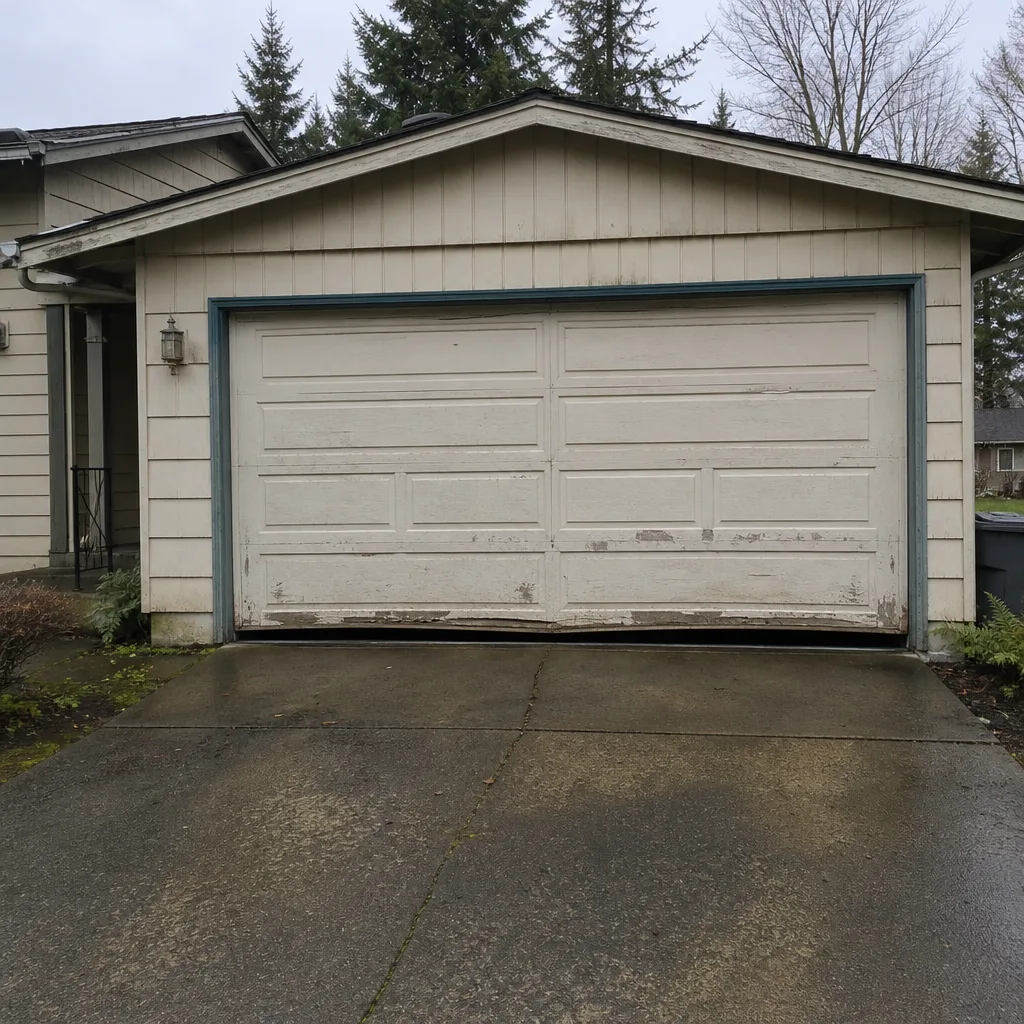 Before
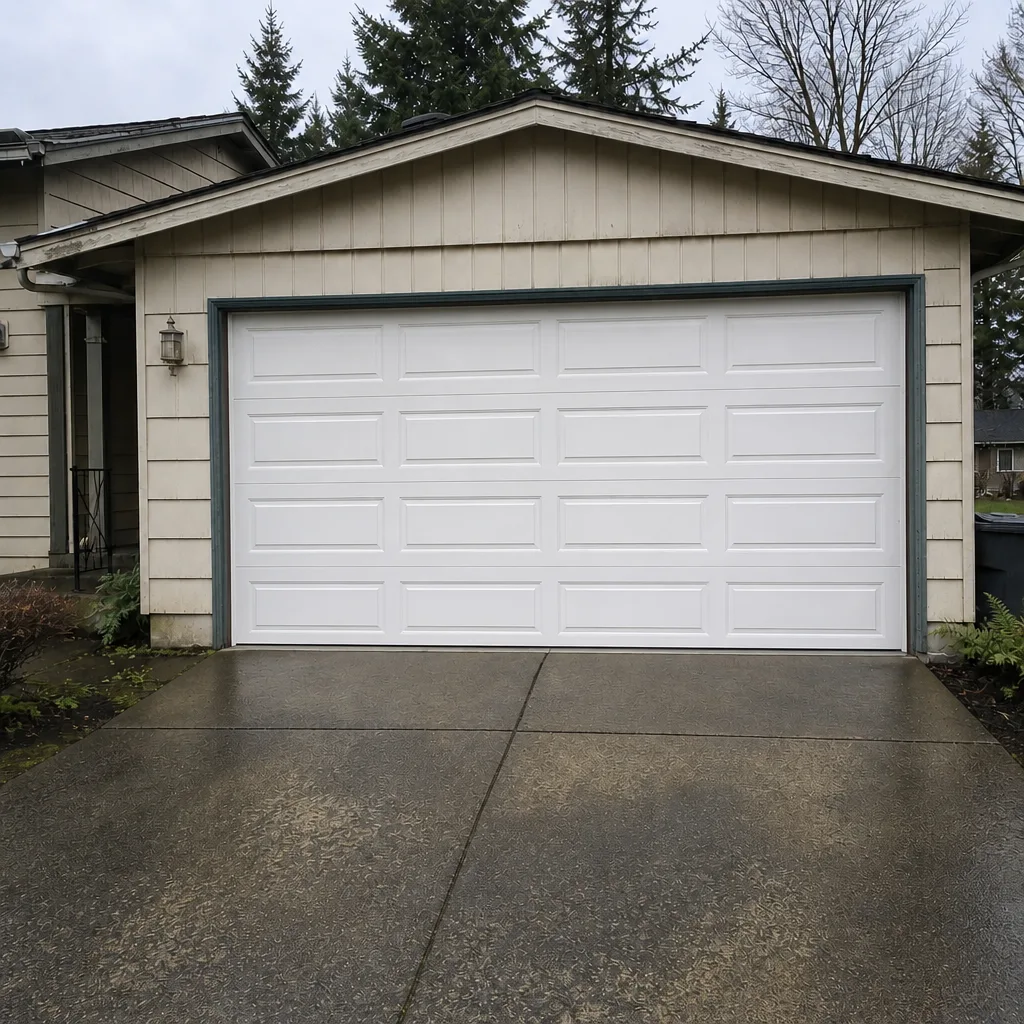 After
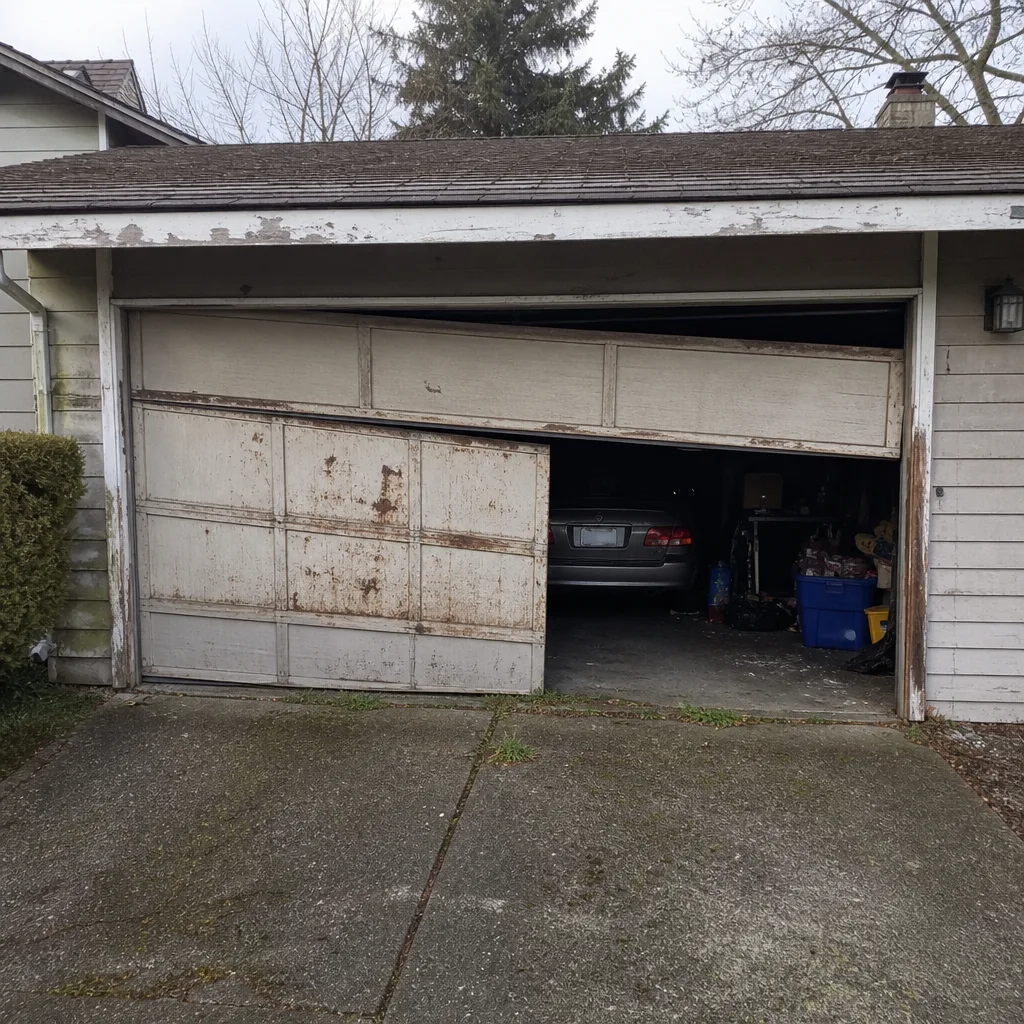 Before
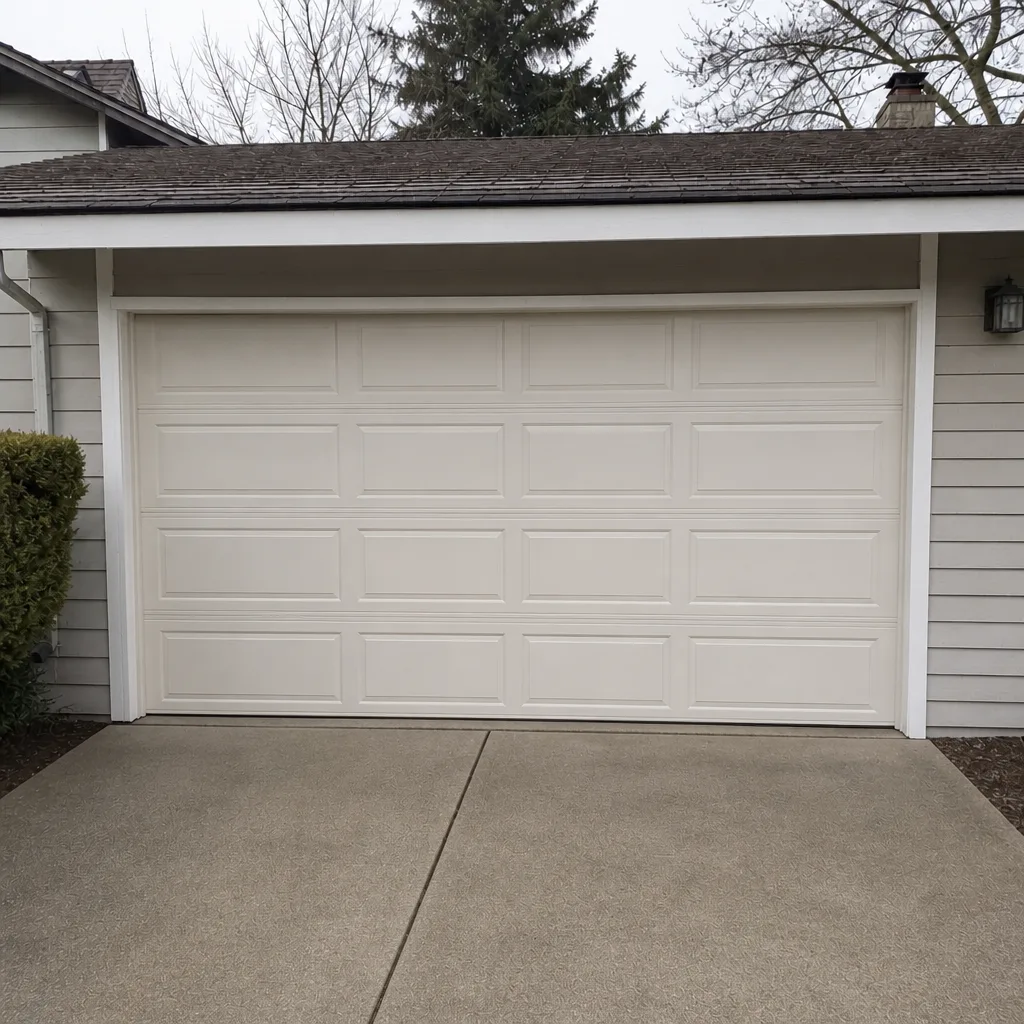 After
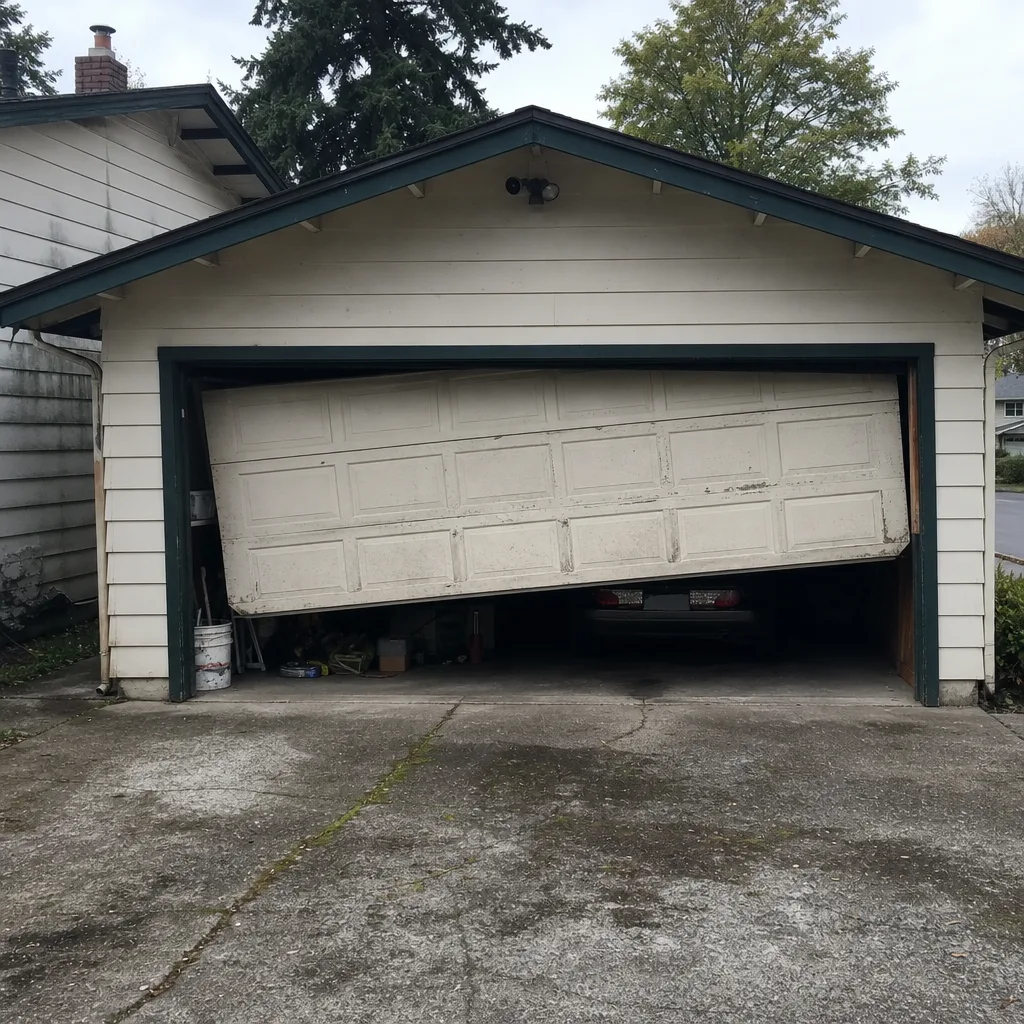 Before
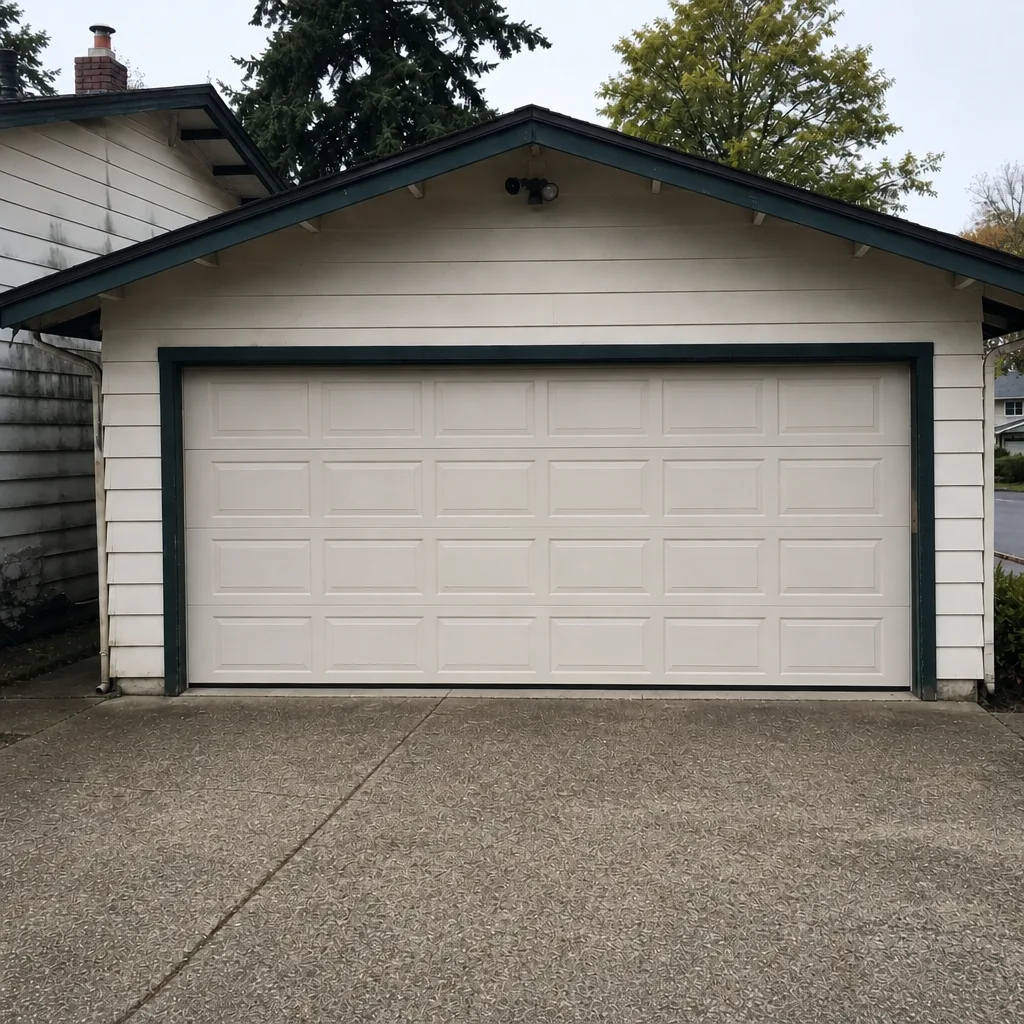 After
When to Call a Professional
Call a professional for anything involving the springs, cables, or opener electronics, and for any door that won’t open, won’t close, or reverses without warning. These are the situations where a homeowner can get hurt or make a small repair much bigger. Renton Garage Door Repair Co offers free estimates in Renton – call (855) 475-0589. Our technicians have up to 15 years of experience, and they work on the brands you already have, including LiftMaster, Chamberlain, Genie, Clopay, Amarr, Wayne Dalton, Craftsman, and Raynor. If your door won’t move and it’s urgent, emergency garage door service is available for situations where a stuck or broken door creates an immediate security or access problem, not one to schedule for next week.
The rest of the seasonal care in this guide is manageable for a confident homeowner. When in doubt, get the door looked at. The cost of an inspection is small compared to the cost of a warped door or a failed spring.
Frequently Asked Questions
The best time is September, with a target of getting the prep work done by October 1st, before the wet season starts. Summer is the right time for spring and cable inspection, and April is when you should do the post-winter audit. Renton’s damage window is October through March, so prep should be done before the rain arrives.
The bottom seal freezes to the concrete when water gets between them and overnight temperatures drop. In Renton’s hill neighborhoods like Talbot Hill and Benson Hill this happens more often because the evening cold is sharper. Warming the seal gently with a hair dryer on low from the inside usually frees it. Never pour hot water on the door, and don’t keep pressing the opener – that can damage the opener motor.
Replacing a bottom seal is one of the least expensive maintenance tasks on a garage door, but the exact price depends on the seal type and the door’s dimensions. Call (855) 475-0589 for a free estimate. We give a written price before any work starts, and the price you’re quoted is the price you pay.
For repair and emergency situations, yes, same-day service is often available. If your door won’t move and it’s a security or access problem, call (855) 475-0589. For installations, replacement doors, and planned projects, the work is measured, ordered, and scheduled, so it’s not a same-day job. Estimates are free either way.
No. The written estimate you receive before work begins is the price you pay. We don’t add charges after the fact. If we discover something during the job that wasn’t visible in the estimate, we stop and explain it rather than billing you for work you didn’t agree to. Call (855) 475-0589 with any questions.
The local professionals we connect you with are licensed and insured as the state of Washington requires. Our technicians have up to 15 years of experience, and they work on equipment from eight leading brands. If you want to confirm the credentials of the pro assigned to your job, we’re happy to go through that before work starts. For an exact quote, call (855) 475-0589 – estimates are free.
The Bottom Line
Renton’s wet season does most of the yearly damage to garage doors, so your maintenance calendar should be weighted toward October through March. Get the September prep done by October 1st, watch the bottom seal line through the winter, use the summer heat to have springs and cables inspected, and do the spring audit in April before the damage settles in. The one task that makes the biggest difference is replacing the bottom seal in late summer, before the rain. That alone prevents a large share of the winter emergency calls we see. Do the small tasks on schedule, and your door will handle a Renton winter without drama. For anything involving springs, cables, or an urgent repair, our repair team is ready to help.
If you’d like a trained technician to walk through your door this season, call Renton Garage Door Repair Co at (855) 475-0589 for a free estimate. We cover garage door repair, opener repair, spring repair, and new installation across Renton, and if the door won’t move and it’s urgent, emergency service is available.
Written by the team at Renton Garage Door Repair Co.